
Industry Connect: How Gaming Technology Adds a 'Wow Factor' to BIM
December 28, 2015
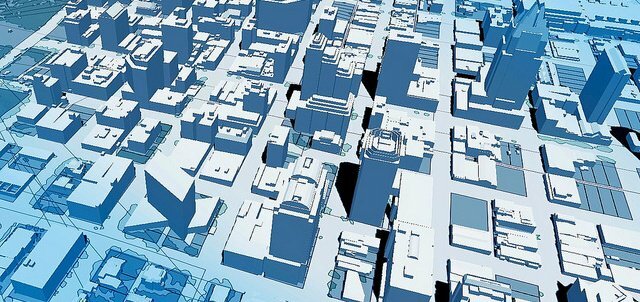
The marriage of the two technologies is changing the way construction professionals and designers do business with customers and with each other. And now, it seems the combination is on the verge of changing the industry as a whole.
---
Imagine donning a headset and taking a virtual stroll through a fully designed space, using a wand to make at-will changes to furnishings, windows and other elements, even peeling back finished walls to survey the underlying structure without leaving a mark behind. It’s the stuff of Hollywood movies — or at least it was before gaming technology merged with building information modeling (BIM) to create such imagery.
Building on innovation
The proliferation of BIM itself is a tremendous leap forward from previous construction modeling and graphics processes — such as foam core models — commonly used in the construction industry that were predominant up until about a a decade ago. In that relatively short period of time, and according to a recent Dodge Data & Analytics report, written in association with AEC software company Bentley Systems, BIM has provided construction companies with significant benefits, such as improved productivity and reduced costs, as well as given them a competitive advantage.
Globally, BIM is predicted to grow to $11.54 billion by 2022, and software companies and the industry’s BIM experts are pushing the boundaries of the technology's possibilities with gaming engines, also referred to as real-time engines, to create as rich of a virtual experience as possible.
"There are cars driving around the city, the ambient noise of a city, and you have wind blowing by you. So it really is this fully immersive experience," Davis said. "You can look 360 degrees in every direction, and it looks like a mini-model of the city of San Francisco."
Davis said that depending on which program a design was initially created in, customers and designers can make changes on the fly in Stingray and immediately see the results.
"It also allows the architects to get in and understand the space before the customer has ever even seen it," Davis said. "The advantage there is that the architect knows what they're delivering, and they know what they're selling, and, of course, the customer knows just as much."
For the full article at Construction Drive click: HERE