
Industry Connect: Five Cutting-Edge Building Materials to Watch in 2016
January 19, 2016
Products that draw inspiration from the natural world.
---
Blaine Brownell, architect and materials researcher and author of Transmaterial books (2006, 2008, 2010), compiled his predictions on the next big materials technology for 2016. The materials listed are not yet commercially available, however many will launch in 2016.
The collection introduces products that draw inspiration from the natural world including: synthesized spider threads, consumer products bio-engineered from discarded shrimp shells, and a bridge built entirely by robots.

1. Solar Thermal Cladding
“Solar Activated Façade, a cladding system that combines wood louvers and back-vented glazing.” The system consists of prefabricated wooden panels angled to deflect the summer sun while inviting the winter’s sun’s radiant energy into an interior cavity. This cladding mounting system is designed as a thermal storage device for use in colder climates.
2. Synthetic Spider Thread
Created by the Japanese company Spiber, the goal was to create a material “as strong, elegant, and versatile as spider silk”. The synthetic spider thread, called Qmonos (based on kumonosu, the Japanese term for a spider web), is crafted with bio-engineered bacteria and recombinant DNA to produce high-performance, silk-like fibers. Spiber has developed a scalable production method, and collaborated with The North Face to produce the Moon Parka, an insulated jacket made with Qmoronos fibers that is strong enough to withstand extreme polar expeditions.

3. Structural 3D Printing
Dutch Designer Joris Laarman’s MX3D’s multi-axis metal-printing technology is driven by “industrial robots fitted with welding machines that can print lines of various metals in midair, starting from an anchored surface—similar to drawing a structure in space—by incrementally fusing molten metal in short lengths and allowing it to cool.” The world’s first 3D-printed bridge is scheduled to be built using this revolutionary technology.
4. Self-Healing Concrete
Researchers from the School of Engineering at the University of Cardiff in Wales have developed a project called Materials for Life to conduct the first major trial of the self-healing concrete. “There are three types of self-healing concrete: one with shape-memory polymers activated by electrical current, one with healing agents made from organic and inorganic compounds, and one with capsules containing bacteria and healing agents”. The team’s goal is to “create sustainable and resilient systems that continually monitor, regulate, adapt, and repair themselves without the need for human intervention."
5. Bioplastics
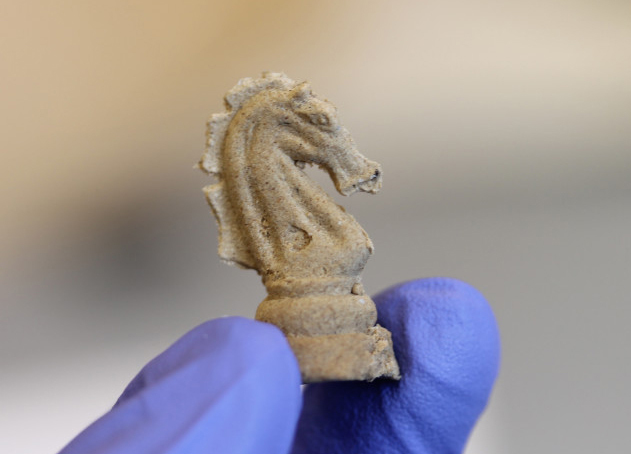
Wyss founding director Don Ingber and postdoctoral fellow Javier Fernandez at Harvard University's Wyss Institute for Biologically Inspired Engineering have developed a new bioplastic made from discarded shrimp shells. The thin films have the same structure and composition as chitin, or insect cuticle. The material can be molded to a variety of 3D shapes thanks to its tough yet flexible natural chitin. The new plastic matches aluminum in strength at only half the weight—in addition to being biocompatible, biodegradable, and inexpensive. “The researchers are optimistic about the material's ability to replace fossil fuel–based plastics in consumer and medical applications.”
---
For more information on these fascinating materials, click here to see the full article at Architect Magazine.